
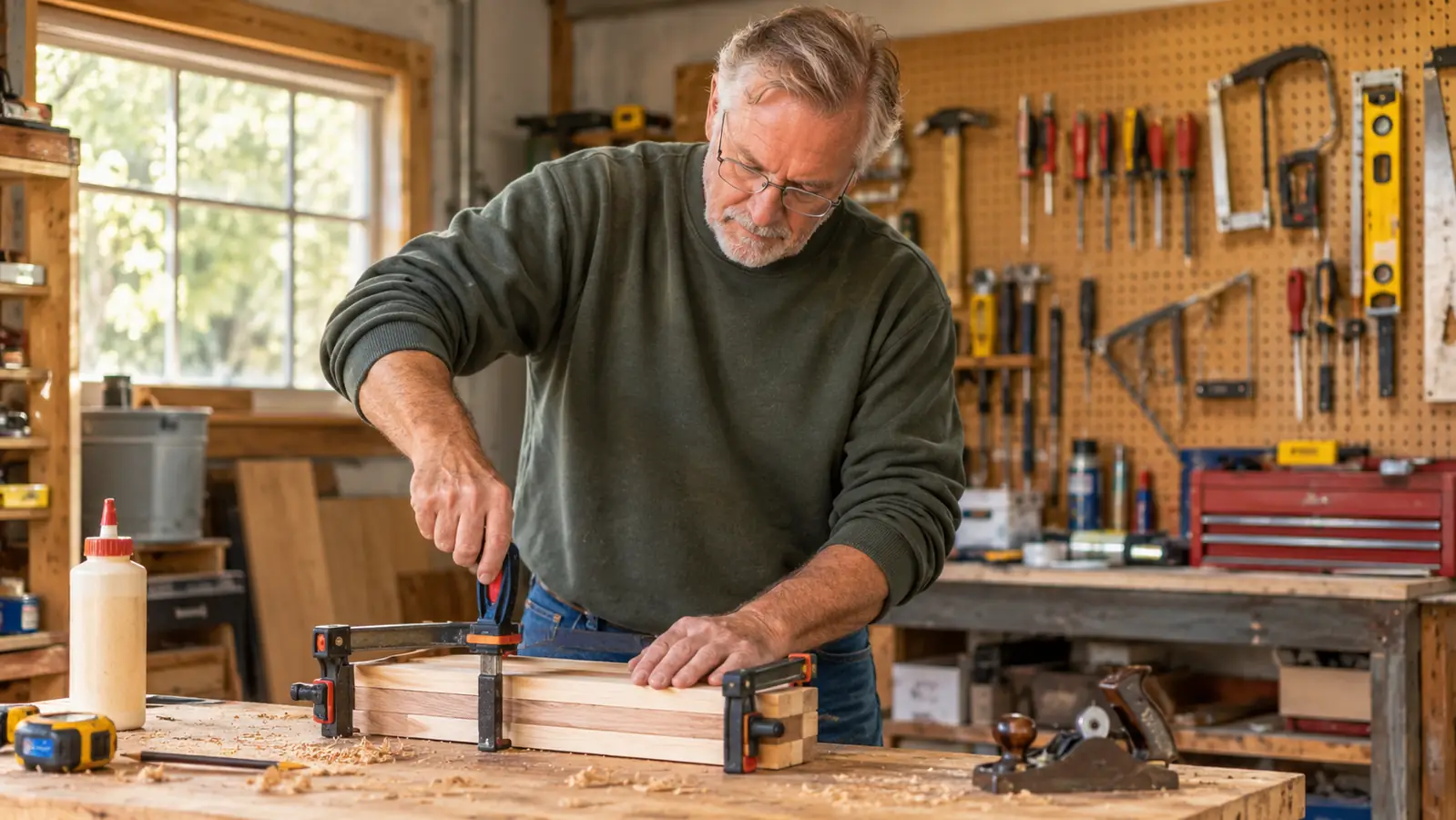
The first thing I noticed about the IRWIN Quick-Grip 6-inch clamps was not the grip. It was that I could hold a glue-up square with one hand and reach for the next clamp with the other. That sounds like a small thing until you have spent twenty five years clamping boards with two hands, a scrap block, and a certain amount of muttering.
I am Gene Halvorsen. I am 63, retired out of commercial electrical work, and I have been building furniture in a converted two-car garage outside Richmond, Virginia for about 25 years. Cutting boards, small boxes, shelving, a cedar chest, picnic tables for the family. The four-pack of these 6-inch mini bar clamps has been hanging on my pegboard for months now, and they have quietly become the first clamps I grab on anything small.
The Quick Verdict
Fast enough to change how you plan a glue-up, strong enough for boards and boxes, and honest about its own reach. Mine live on the pegboard, not in a drawer.
Amazon Check Today's Price →The clamp that turns one pair of hands into three
Four 6-inch one-handed bar clamps, rated at 140 pounds of force each, with a resin body, hardened steel bars, and jaw pads that protect the work. Mine have been in and out of the rack for months without a slip.
Amazon Check Today's Price on Amazon →How I've Used It
Most of my clamping is small work. A cutting board glue-up is maybe 12 by 18 inches and needs pressure in half a dozen places along the seam. A box is four corners and a lid panel. A shelf with a face frame is a dozen small bites. That is the size of work these clamps were built for, and it is most of what comes off my bench in a given month.
Last March I glued up a maple cutting board, four strips, 12 by 18 inches. I set it dry first and marked the seam positions on the bench with a pencil so I would not be doing arithmetic with glue already on the wood. Then I spread glue on all four strips at once, which is the part that punishes you for being slow. On that same board a few years back I used eleven screw clamps and still lost two seams, because by the time I got to the far end the glue had started to skin and the joint closed starved. This time I used six Quick-Grips, worked left to right, and every seam closed with squeeze-out running the full length. Same board, same glue, no scramble.
The pattern repeats every time. Spread glue, set the joint, hold it with one hand, pick up a clamp with the other, squeeze it closed on the seam, move to the next one. No fumbling for a second hand and no clamp sliding off while I reposition my grip. On a four corner box I can have all four clamps on and snug in under a minute, which is faster than I used to manage with twice as many clamps.
They also do the jobs that are not glue-ups at all. Holding a straightedge in place for a router cut. Pinning a fence to the drill press table. Keeping a backer board from wandering while I cut a small part. Holding a piece to the bench when the vise would just be in the way. They are not the strongest clamp in the shop. They are the fastest, and a lot of shop work is a race against a glue line that is already setting.
The other place they earn their keep is away from the bench. Holding a jig in place on a ladder, holding a piece of trim while a fastener goes in, holding a board to the sawhorse for a quick cut. A clamp this light is easy to toss in a tote and take along, and I have done that more than once when a neighbor needed a hand.
What the One-Handed Trigger Buys You
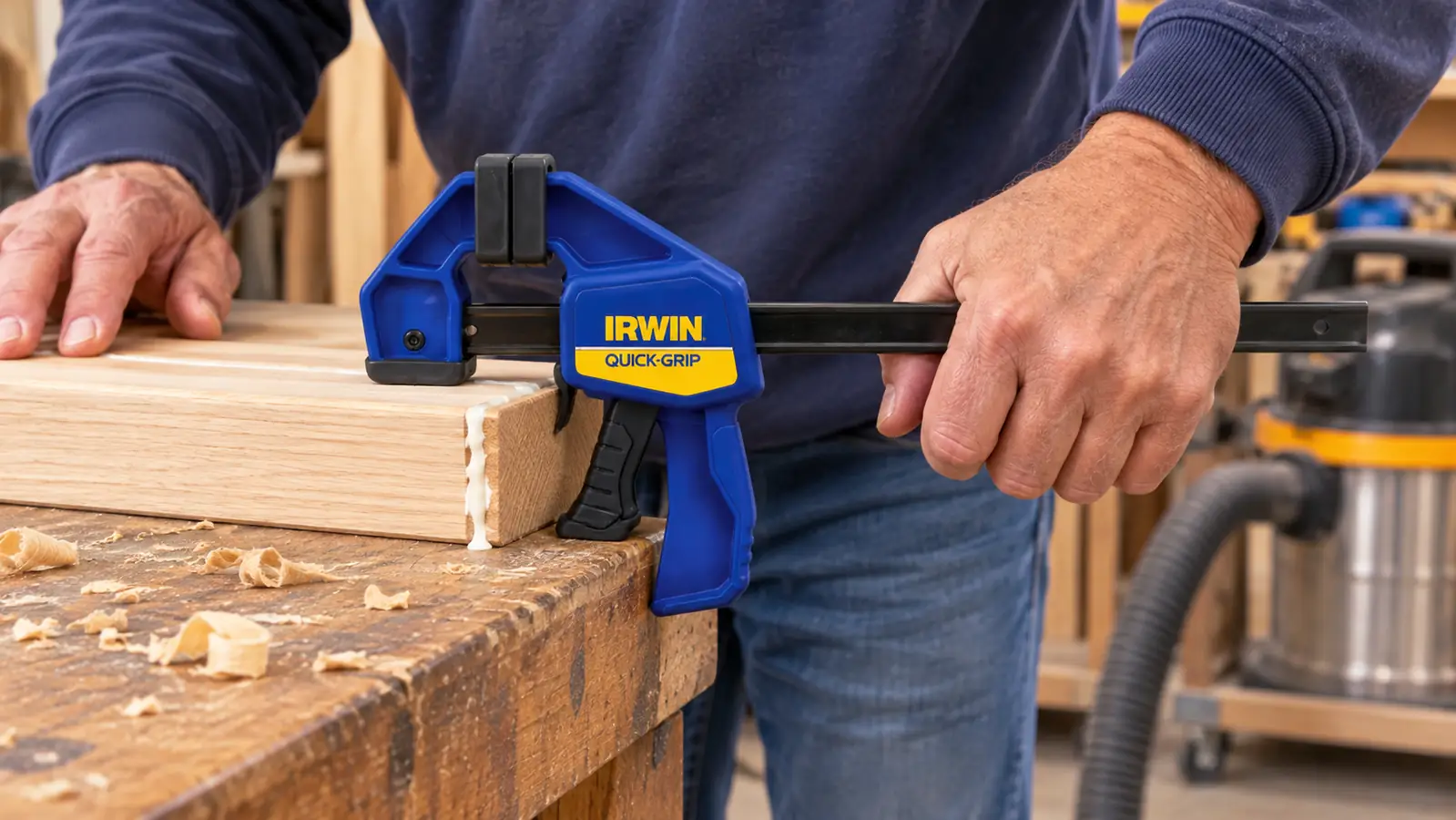
Squeeze the handle and the jaw closes a notch at a time. Each squeeze adds pressure and the clamp holds it, so you can tighten the clamp in mid-air and set it down already gripping the joint. There is a release trigger within reach of the thumb, and one press backs the jaw off instantly. That release is the part that makes these quick. A screw clamp takes several turns to let go. This takes a press.
That changes how you sequence a glue-up. With screw clamps you plan the order, because every clamp costs you time and the clock is running on the glue. With these you set the whole thing dry first, check the joints, then walk the glue-up in whatever order is fastest. I have had glue-ups where the fourth clamp went on before the squeeze-out started running, which I used to put down to luck.
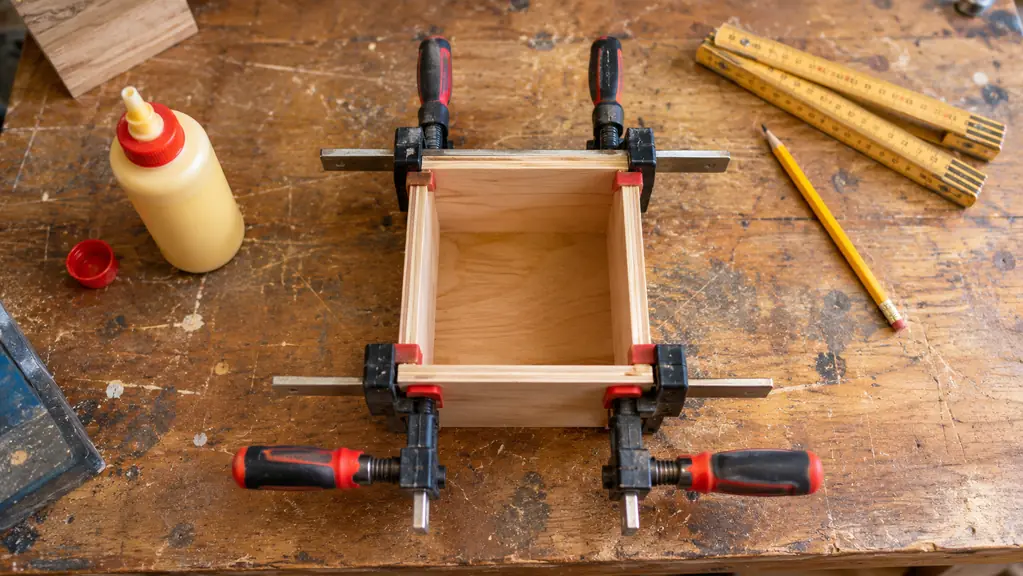
A concrete example. A small walnut box, 6 by 9 inches, mitered corners, and I was working alone on a Sunday afternoon with nobody to hand me anything. I dry-fit the four sides with two clamps and checked both diagonals against a folding rule until they matched inside a thirty-second of an inch. Then I took it apart, ran a bead on all four miters, and put it back together. The first clamp went on the first corner while I still had the joint lined up by hand, and by the time I reached the fourth corner the box was still square, because the first three were already holding it there. With screw clamps that job needs a helper or a band clamp, and a band clamp on a mitered box tends to pull the joint slightly out of flat.
The one-handed part matters most when the other hand is busy. Holding a corner square, holding a panel flush at the edge, holding a shim in place while the second clamp goes on. The clamp becomes a third hand, and on small work that is worth more than raw clamping force. It is also the reason these are the clamps I hand to someone helping me in the shop, because they do not need to be taught anything.
140 Pounds of Force, and Where That Stops Being Enough
IRWIN rates these at 140 pounds of force. For a 6-inch clamp with a resin body and steel bars, that is plenty for the work they are sized for. A cutting board seam closes and stays closed. A box corner pulls tight. A face frame sits flush against the carcass.
Where 140 pounds runs out is when the joint is fighting back. A wide panel that cupped and needs pulling flat. A twisted board on an outdoor project. A glue-up with a gap that has to be forced shut. Push a clamp past what it is rated for and something gives. The bar flexes, the pads walk, and the joint creeps back open. I learned that years ago with cheap clamps and I do not repeat it.
Two summers ago I built a cedar picnic table and tried to pull a twisted apron straight with two of these. It did not work, and I knew within about ten seconds. The bar bowed, one pad slipped off the edge of the apron, and the twist came back the moment I eased off. I switched to pipe clamps with a straight caul and got it flat, then used the Quick-Grips to hold the caul in position while the pipe clamps did the pulling. That is the honest division of labor, and it is the arrangement I use now on anything that is not already close to straight.
The plain answer is that these are clamps for holding, not clamps for correcting. If your boards are jointed and squared and the dry fit closed without pressure, 140 pounds is more than enough. If the dry fit needed a pipe clamp to close, no 6-inch clamp was going to save that joint no matter what number was printed on the package.
Resin Body, Steel Bars, and How They Held Up
The body is resin and the bars are hardened steel, which is the right combination at this size. The steel keeps the bar from bowing under load and the resin keeps the weight down. All four clamps together weigh about a pound, so a handful of them is nothing to carry from the bench out to the truck and back.
One of the four fell off the bench onto the concrete in February, from about three feet up, and I picked it up expecting to find the jaw housing cracked. It was not. The only mark was a scuff on the body, the trigger still had the same feel, and the release still backed off in one press. That is not a torture test and I am not going to sell it as one. But it is the kind of drop that finishes cheap clamps, and this one did not notice.
The jaw pads are the part I expected to fail first. They have not. No marks on softwood, no scuffs on a finished panel when I used one to hold a piece while I drilled it. I have a cherry panel that came off the bench last fall with two of these on it, and there is nothing on the face where the pads sat. That matters more than it sounds. A clamp that dents cherry is a clamp you stop using on cherry, and then you own four clamps that only come out for construction lumber.
Months in, the triggers still feel crisp, the release still backs off in one press, and not one of the four has slipped on a glue-up. IRWIN covers these with a full lifetime guarantee against defects in material and workmanship. I have not needed it, which is the only meaningful review of a warranty.
Where They Fit Next to the Clamps Already on My Wall
These do not replace the F-style clamps on the wall, they take work off them. The long bar clamps still handle anything wider than a couple of hands or anything that needs real force. The Quick-Grips handle the corners, the edges, the small parts, and the hold-it-for-a-second jobs. Between the two, most assemblies stop needing a second person.
That split is worth thinking about before you buy. If your clamping is mostly small, a four-pack covers you. If it is mostly panels and carcasses, the four-pack is an accessory and not the main purchase, and buying it first will leave you short. I would rather see a beginner own two long bar clamps and four of these than eight of either one.
What I'd Change
The reach is the limitation and it is a limitation by design. Once a glue-up is wider than the space between my hands, these run out of room and I am reaching for something longer. That is the size class, not a defect, but it is worth saying plainly so nobody buys a four-pack expecting to clamp a tabletop.
Second, four is a good number for boards and boxes and a frustrating number for anything bigger. I added a second four-pack for that reason. If you clamp small work regularly, plan on eight, or plan on rotating between these and whatever longer clamps you already own.
What I Liked
- One-hand operation with a thumb release, so a glue-up moves faster
- 140 pounds of force is enough for board seams and box corners
- Resin body and hardened steel bars keep the flex down at this size
- Jaw pads have not marked softwood or finished panels
- Four in a pack covers most small glue-ups and jigs
- Full lifetime guarantee from IRWIN
Where It Falls Short
- Short reach, so anything past a small panel needs a longer clamp
- Four is not enough for bigger assemblies
- Not a clamp for pulling a warped board flat
Months of use, dozens of glue-ups, and not one of the four has slipped or left a mark on a panel.
Who This Is For
If your work is cutting boards, small boxes, shelving, face frames, jigs, and the hold-it-while-I-drill jobs, these are the clamps that will live on your bench. They are also a good first clamp for someone setting up a garage shop, because one-handed operation covers for a lack of practice and a shortage of clamps at the same time.
They are worth adding even if you already own bar clamps. The long clamps do the pulling, these do the fussing at the corners, and most furniture assemblies get a lot easier when both are within arm's reach. That is how they ended up permanent residents of my pegboard rather than occasional helpers.
Who Should Skip It
If you are clamping tabletops, cabinet carcasses, or anything that has to be pulled straight, skip these and buy bar clamps. A 6-inch clamp rated at 140 pounds is not the tool for a joint that is fighting you, and forcing it will frustrate you and mark the work.
Skip them too if you clamp a few times a year and own nothing else. One good pair of longer bar clamps covers more ground for occasional projects, and you can add a four-pack of these later when you find yourself one hand short on a glue-up.
Four clamps that earn their pegboard space
One-handed tightening, an instant release, 140 pounds of force, and jaw pads that have not marked a panel yet. Start with the four-pack and add a second when the work gets bigger.
Amazon Check Today's Price on Amazon →