

The short answer: I own both, and the little one gets used more. The Kreg R3 is a hand-sized pocket-hole jig that lives in a case on a shelf under my bench. The Kreg K4 is the bigger benchtop model that earns its place when I am cutting the same joint forty times in one afternoon. Build a cedar chest or a set of shelves one at a time and the R3 does everything you need. Run face frames for a set of shop cabinets all Saturday and the K4 buys you speed you will actually feel. Neither one is a mistake. The real question is how often you drill the same joint twice in a row, and most hobby woodworkers overestimate that number by a wide margin.
I have been at this about twenty-five years, weekend work in a garage bay I converted outside Richmond, and pocket-hole joinery has saved me more time than any other single method I have adopted. I will not quote part counts at you or pretend a plastic body is a religious experience. What follows is what changed on my bench when both jigs were sitting there at the same time, and which one I would buy again if I could only keep one.
| Kreg R3 | Kreg K4 | |
|---|---|---|
| Portability | Sixteen ounces in a compact carrying case; goes on a shelf or in the truck | Stays on the bench; moving it is a two-hand job |
| Holding the workpiece | You supply the clamp; the included clamp pad fits most clamps | Clamp is built into the jig, so both hands stay on the drill |
| Repeat runs of the same joint | Stop and re-clamp for every board | Set once and keep feeding boards through |
| Bench footprint | Drops into a case when the job is done | Occupies bench space whether you are using it or not |
| Work away from the shop | Tailgate, deck, hallway floor, a relative's house | Bench-bound |
| Chips and cleanup | Chips fall through the guide onto the bench and the floor | Same story. Neither jig catches its own chips |
Where the Kreg R3 Wins
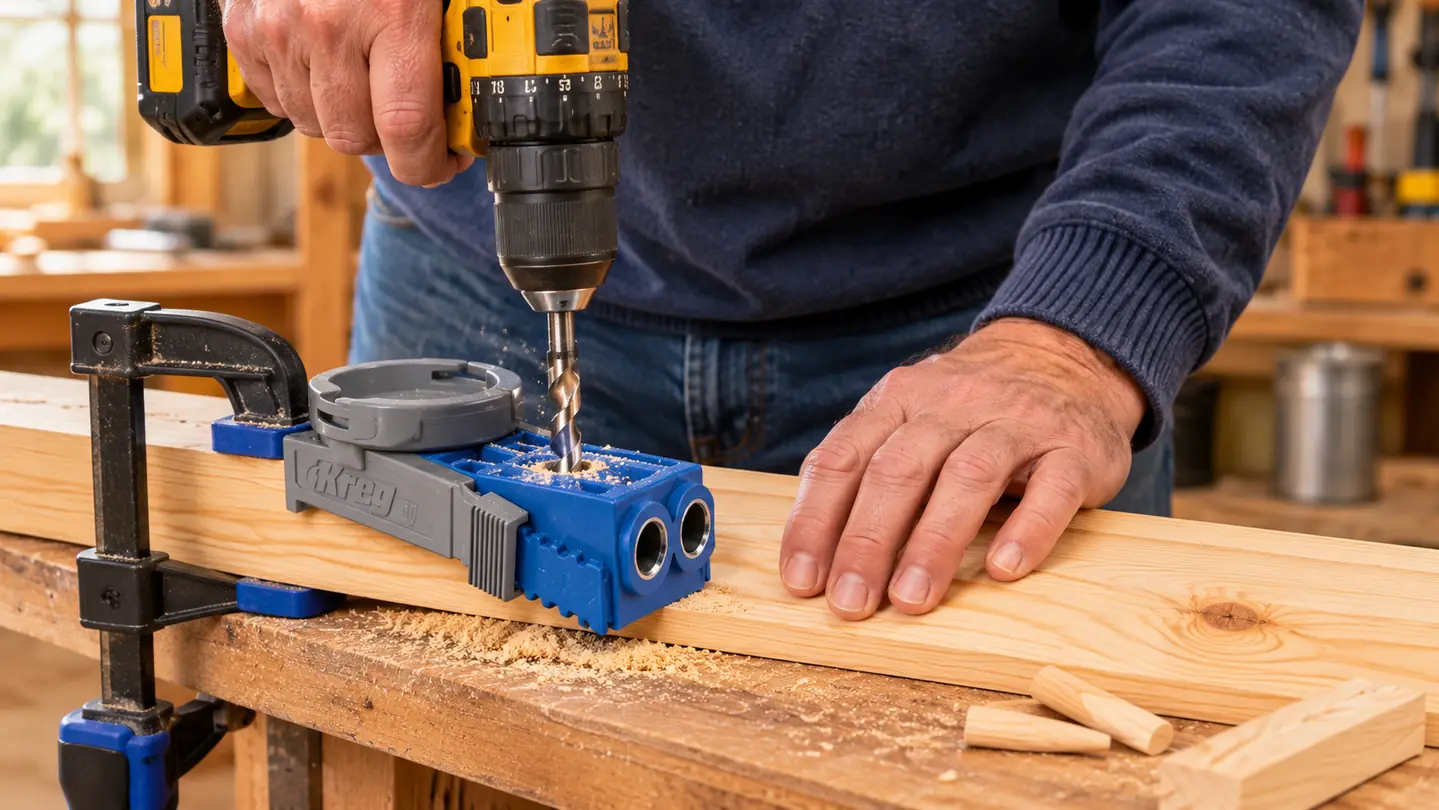
Portability is the entire point of the R3, and in a garage shop it is not a small thing. It weighs sixteen ounces and measures eight inches long, two and a quarter wide, and five tall, so the compact carrying case slides onto a shelf and disappears until I need it. My bench is not a showroom. When a job ends the clamps, the shop vac and the offcuts all have to go somewhere, and a jig that folds into a case is a jig that gets pulled out on a Tuesday night for a single joint. A bench-mounted jig that has to stay set up is a jig I think twice about dragging into a job. The case itself is about the size of a lunch box. It sits on the shelf with a coffee can of screws, and I can put a hand on it without looking. That sounds like a small thing until you have spent an evening shifting a benchtop tool out of the way to make room for a four-foot board.
The second win is working away from the bench. I have drilled pocket holes on a tailgate in a lumber yard parking lot, on a friend's deck with a picnic table half assembled, and on a hallway floor with a cabinet on its side. The R3 rides in the truck or in a tool bag and lets the workpiece be the bench. It also handles the small stock I use most, cutting boards, small boxes, one-by shelving, because it drills material up to one and a half inches thick and the nine depth settings on the positioning sliders get me from a half-inch board to a thick rail without guessing. The included clamp pad lets the drill guide work with most clamps, so the bar clamps and C-clamps already on my pegboard do the holding. It is also the cheaper way into pocket-hole joinery, which matters while you are still deciding whether you even like the method. The last time it left the shop was a Saturday in October, helping a neighbor rebuild a set of porch rails. I set the jig on the top step, moved the sliders to the rail thickness, and drilled all twelve holes with the drill running off an extension cord through his front door. No bench, no vise, no setup beyond opening the case.
Where the Kreg K4 Wins
The K4 wins on throughput, and it wins by enough that I want to be fair about it. The clamp is built into the jig, so you set the board in place, the jig holds it, and both hands stay on the drill. With the R3 you are running a separate clamp every single time, and across a long run of joints that is the difference between finishing a face frame before lunch and finishing it after. Thirty-two pocket holes into a stack of rails is not a craft problem. It is a handling problem, and the bigger jig removes most of the handling. The job that settled it for me was a run of shop cabinet face frames, six of them, which came to just over ninety holes. I did the first frame on the R3 and quit at nine in the evening with my forearm aching. The K4 did the other five in one afternoon and I was not tired at the end of it.
The second win is mass. The K4 sits where you put it. It does not skate when you lean into the drill, and a long board laid across it does not tip the way a board can on a jig you are holding down with your off hand. A six-foot shelf board laid across the big jig stays put while you drill the far end. On the small jig that same board wants to swing, and you end up clamping the overhang to the bench with a second clamp, which is exactly the handling the portable jig was supposed to save you. If your work is mostly carcass parts and cabinet panels, that extra reference surface is worth more than the portability you give up. I will also say this plainly, because nobody selling jigs will: the K4 does not make a better joint. Both drill the same hole at the same angle with a six-inch driver bit and a depth collar. What the K4 makes better is your afternoon.
The one I reach for on a Tuesday night
The Kreg R3 lives in a case on the shelf, drills stock up to one and a half inches, and cuts the same pocket as the big bench jig. If you build one thing at a time, this is the one.
Amazon Check Today's Price on Amazon →Sixteen ounces, eight inches long, and it drills the same pocket the bench jig does. The difference between them is handling, not joinery.
What Both Jigs Do the Same
Both jigs drill the same pocket. Same angle, same bit, same depth collar doing the same job. That sounds obvious, and yet the talk around bench jigs quietly suggests the larger model builds a stronger joint, which is not how wood and screws work. A pocket hole is only as good as the clamp time, the screw length, and whether the board faces are flush when the screw goes in. If you are getting gaps or a joint that creeps, the fix is in your clamping and your bit depth, not in a bigger jig body. I learned that the tedious way on a cedar chest, where two corner joints came out a hair proud. I blamed the jig, reset the depth collar, drilled test holes in scrap, and got the same result. The actual problem was that I was pulling the clamp off before the screw had drawn the faces tight, and the boards had shifted about a thirty-second of an inch. Better clamping, and the next four joints closed up clean.
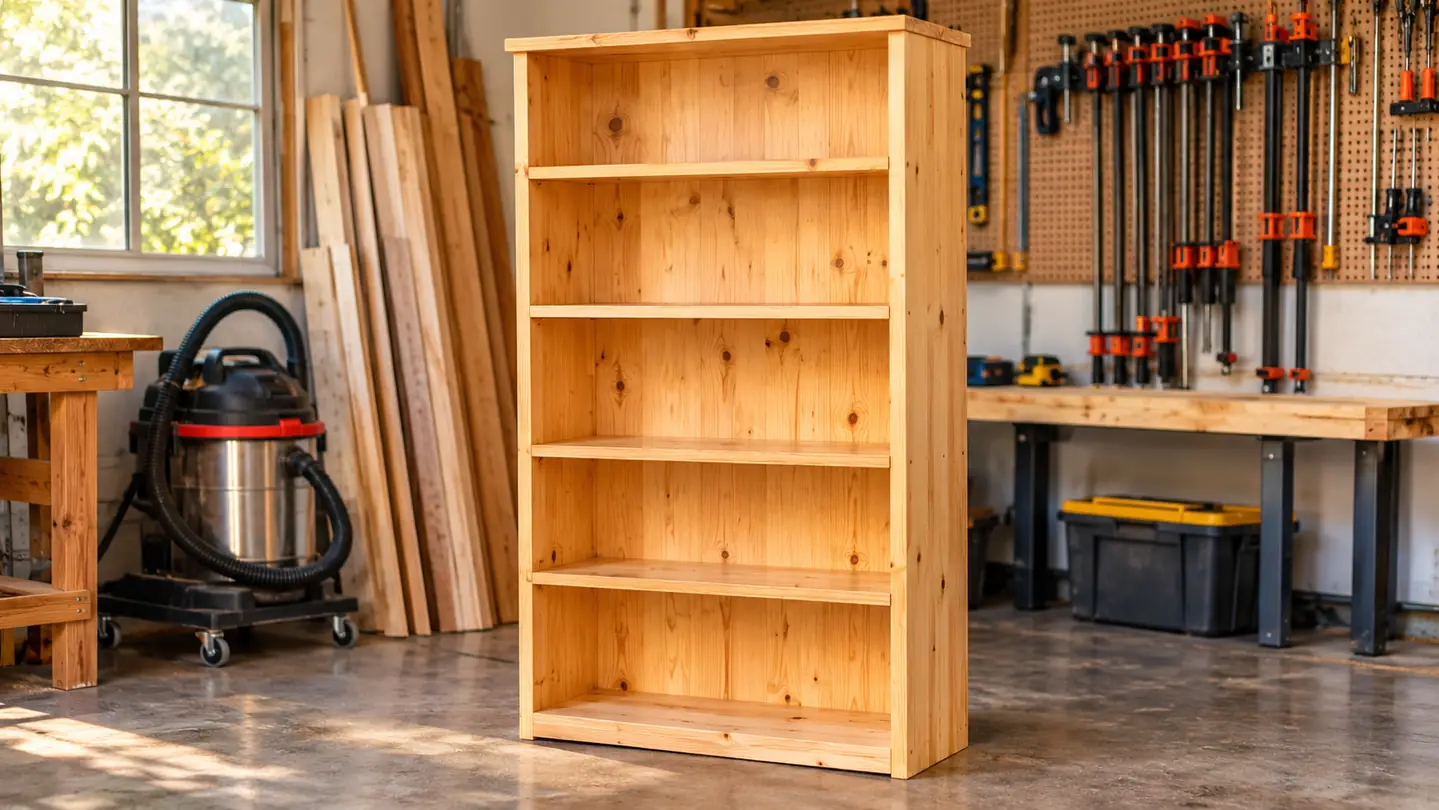
Both also leave the same mess. Chips come out of the guide and land on the bench, the floor and your shoes, and neither jig is a dust solution. I keep the shop vac nozzle within reach and clear the bench between boards, because a board resting on a bed of shavings does not sit flat, and a pocket hole drilled into a board that is not flat will pull the joint out of square. That habit costs ten seconds and saves an entire assembly.
The Part Nobody Mentions: Chips, Clamps and Setup Time
Clamping is the hidden cost of the small jig. The R3 comes with a clamp pad that lets the drill guide work with most clamps, but you supply the clamp, and you supply it every single time. The choice of clamp matters more than it usually gets credit for. A bar clamp with a four-foot spread is wonderful on a panel and useless when you are drilling the end of a rail that is only eight inches long, because the bar sits right where the drill body needs to go. That is when a C-clamp comes out. I keep one of each within arm's reach for exactly that reason, and I have more than once drilled a hole at a bad angle because I was too stubborn to walk three steps and swap clamps. If you do not own a decent clamp yet, budget for one before you buy either jig, because the jig by itself will not hold the board still while the bit comes out.
Setup is where the R3 asks for a little patience. Moving from a three-quarter inch board to a one and a half inch board means loosening the positioning sliders, resetting them, and matching the depth collar on the bit. Ten seconds, if the case is open. The bench jig has the same adjustments to make. The difference is that a jig which never leaves the bench keeps its settings, and a jig that rides in a case gets bumped, so I check the collar before the first hole of the evening. That is a habit, not a defect, but you should know it going in.
Two Things to Buy With Either Jig
Whichever jig you pick, the jig is about half the kit. You need a clamp that holds the workpiece down against the jig without shifting, and a second clamp that holds two boards face to face while the screw drives. I use a bar clamp on panels and a face clamp for assembly, and I would buy those before I bought the bigger jig. A pocket-hole joint that moves while the screw goes in is a joint with a step in it, and no jig on the market prevents that.
The other thing is a spare driver bit. The included six-inch bit does the work, and it will eventually dull or cam out if you drill a lot of hard stock or hit a hidden knot. A dull bit burns its way into the hole and you feel it in your forearm before you see it in the joint. I keep a spare in the case alongside the depth collar and the Allen wrench, so a dull bit is a thirty second swap instead of a reason to quit for the night.
What I Liked
- Rides in a compact case that fits on a shelf, so it comes out for one joint and goes back without a fuss
- Nine depth settings on the positioning sliders cover everything from thin stock up to one and a half inches
- The included clamp pad lets the drill guide work with the bar clamps and C-clamps already in the shop
- Six-inch driver bit, depth collar and Allen wrench all store in the same case, so nothing goes missing between projects
- Light enough to carry to a tailgate, a deck or a hallway floor
Where It Falls Short
- You supply the clamp every single time, so you need a spare hand or a workpiece already held down
- At sixteen ounces it can slide on a slick bench top if you are not holding it steady
- Changing material thickness means stopping to reset the sliders and the depth collar
- Plastic body will not survive a drop off a tailgate or a careless boot
Who Should Buy Which
Buy the Kreg R3 if your projects are one-offs and your shop is a garage bay that also has to hold a truck. Bookshelves, a cedar chest, cutting boards, a picnic table, the odd repair at a relative's house. If you drill pocket holes a few dozen times a month and you value being able to put a tool away, the R3 covers it, and the money you do not spend on a bigger jig goes toward clamps and a spare bit.
Buy the Kreg K4 if you have a dedicated bench and a run of cabinet work in front of you, or if you build in batches. Face frames, drawer boxes, shop cabinets, anything where you set up once and drill fifty joints. The built-in clamp and the extra mass pay you back in time, and the jig stays on the bench where it belongs.
If you are honestly unsure, start with the R3. A jig you use on a Tuesday night beats a better jig you leave on the shelf because setting it up feels like a project of its own. And if you later find yourself cursing a clamp every ten minutes, you will know exactly what the bigger model is for.
Start with the jig that fits on a shelf
Sixteen ounces, a case that closes, nine depth settings and stock up to one and a half inches. The Kreg R3 is the one that comes out for a single joint and goes back without a fuss.
Amazon Check Today's Price on Amazon →