
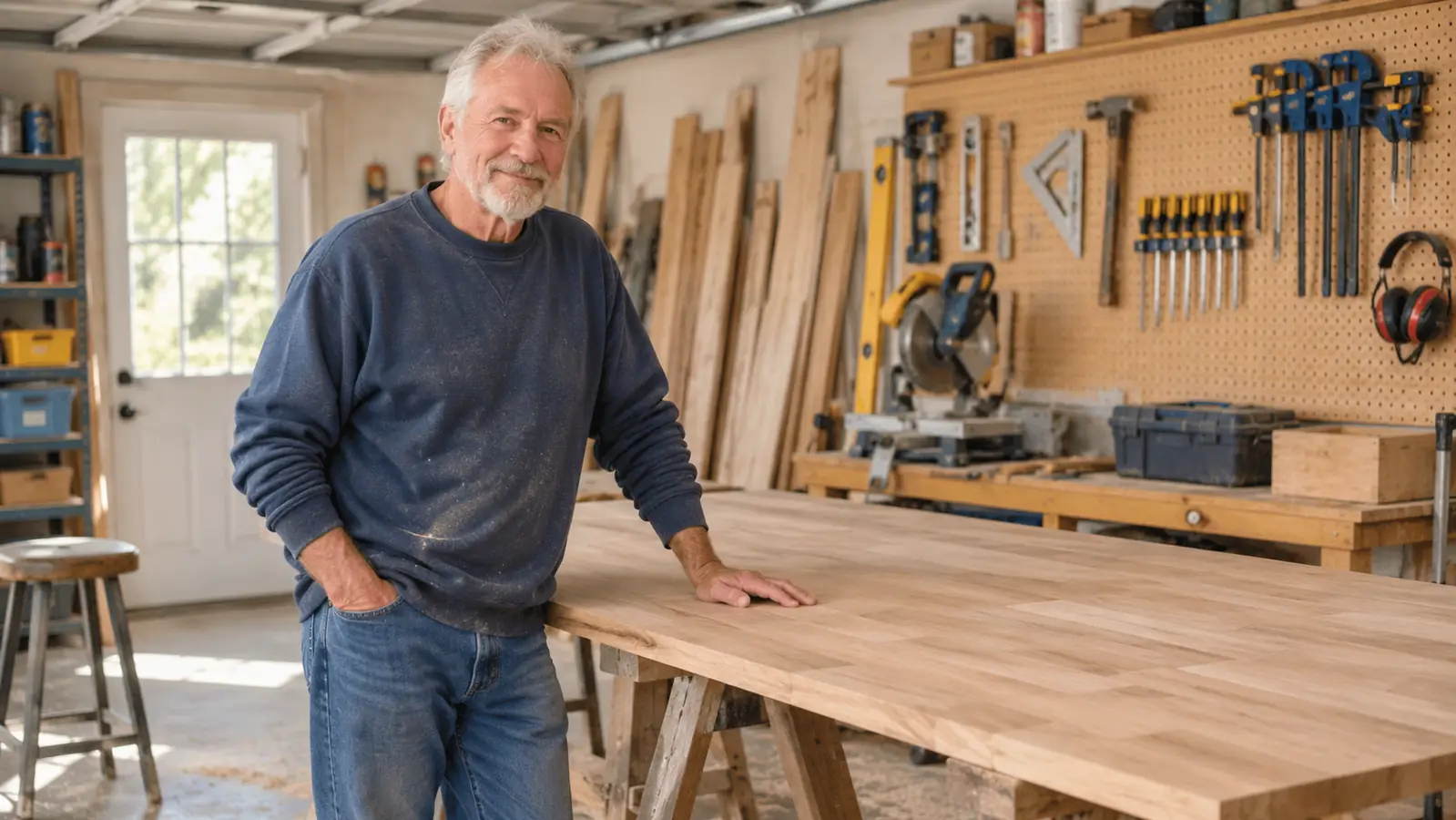
The table sat against the pegboard in my shop for two winters. Quarter-sawn white oak, forty inches across, base already done. Every time I walked past it I felt that small pinch of a job left unfinished. What stopped me was the top. Sanding a glue-up that size by hand is a long, flat kind of misery, and the last top I did that way looked fine under the shop light and wrong in the dining room. Swirls in every direction. Carol was kind about it, which was worse.
I told myself I would get to it on a free Saturday. What I actually needed was to get it done in one Saturday. I had a palm sander in a drawer, and a palm sander is fine for a shelf bracket. On a tabletop it leaves you chasing your own marks, and it will not hold a surface flat for anything. So the table leaned there, and I read about sanders at night the way I do, and I kept coming back to the Bosch ROS20VSC.
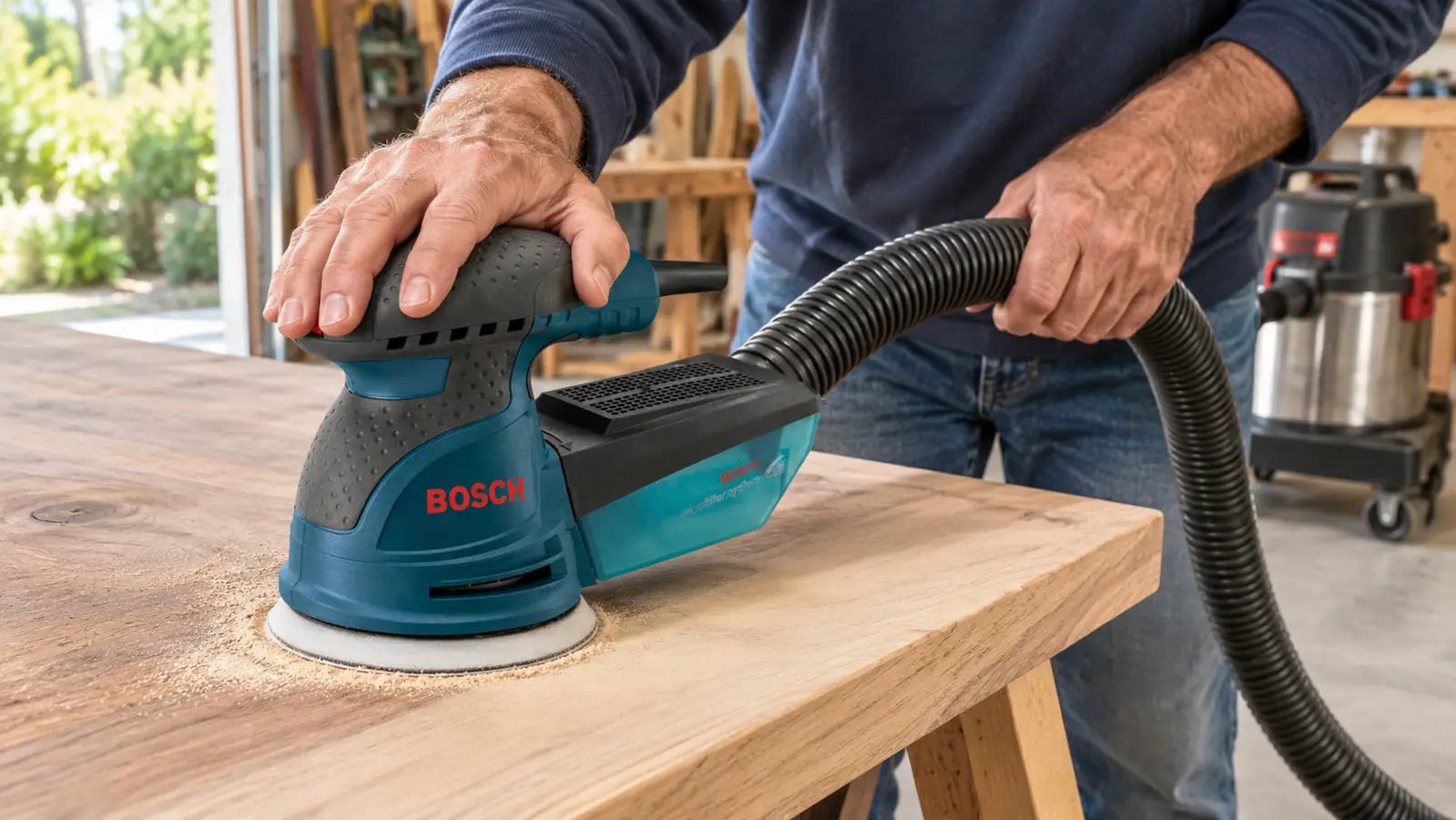
I bought it in March. Five inch disc, 2.5 amp corded motor, 3.5 pounds in the hand. The box had the soft backing pad, a sanding disc, the vacuum hose adapter and a contractor bag, which meant I could work the same afternoon instead of driving back out for parts. At my age that counts for more than a spec sheet does. A tool that needs three more purchases before it runs is a tool that sits in the box until you forget why you wanted it.
Setup took about as long as uncoiling an extension cord. I ran the 20 amp circuit in that bay myself years ago, so I have power where I need it. I fitted the vacuum adapter to the hose on my shop vac cart, set the sander down on the bare oak, and made one pass to see what I had.
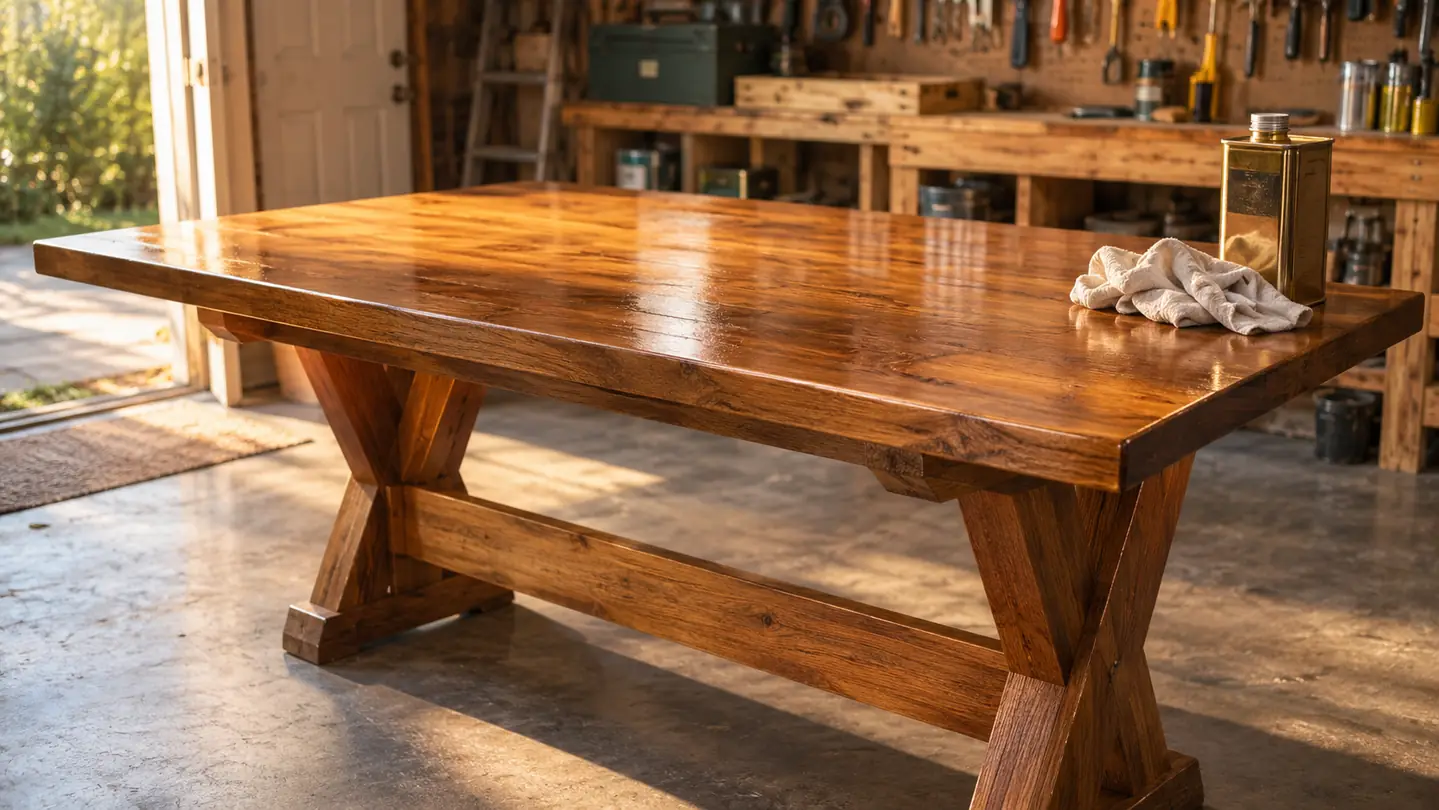
Two coats of oil later I put a raking light across that top and could not find one swirl. That had never happened on anything I sanded by hand.
One Saturday, One Tabletop, No Swirls Left to Chase
The Bosch ROS20VSC is a five inch corded random orbit sander with a 2.5 amp motor and a pad dampening system built to keep swirl marks out of your finish. It ships with the soft backing pad, a sanding disc, the vacuum hose adapter and a contractor bag, so you can start the same day it lands.
Amazon Check Today's Price on Amazon →I started at 80 grit to take down the glue seams and the plane marks from the year before. The sander is 9 inches long, 5 wide and about 6 tall, and at 3.5 pounds it sits in one hand without arguing. I worked in overlapping passes, front to back, and let the weight of the tool do the cutting. Pushing down is how you make a dip in a tabletop. I learned that the slow way.
Then 120, then 150, then a light pass at 180. Between grits I wiped the top with a rag and looked at it under a raking light from the side door. This is the part where a random orbit sander earns its keep. The pad dampening on the Bosch is designed to kill swirl marks on flat and contoured surfaces, and I sanded the eased edge of that top without burning through it or leaving a ring. On my old palm sander the edge was where I always got in trouble.
The motor runs between 7,500 and 12,000 orbits a minute, and matching that to the job is the whole trick. I keep it low for the finish passes and let it come up when I am taking down material. You can hear the difference in the cut before you can see it in the wood.
Dust is the other thing nobody warns you about until your wife walks out to the garage and asks why the truck is white. The Bosch has a micro filter system that traps particles down to half a micron, and I had the hose adapter running to the shop vac the whole time. I emptied the canister twice. The truck stayed clean. The shop vac bag did the heavy lifting and the sander's filter caught the fine material that usually ends up settled on the pegboard for a month.
I finished the top on a Sunday afternoon and set it on the base. Two coats of oil, rubbed out, and Carol came out to look at it. She ran her hand across it and said nothing for a second. Then she said it looked like a table somebody made on purpose. I will take that.
What I'd Tell You If We Were Sitting at My Kitchen Table
I would tell you the sander is not the interesting part. The interesting part is that I had the wrong tool for two years and kept calling it a motivation problem. A five inch random orbit sander with a cord and a hose will flatten a panel in an afternoon. A palm sander will not, no matter how many Saturdays you feed it. If you are sanding anything bigger than a cutting board, get the random orbit and stop negotiating with yourself about it. Buy a grit assortment, hook it to a shop vac if you own one, and do not press down. Let the machine work.
I would also tell you what it will not do. It is corded, so you are dragging an extension cord around the shop, and 3.5 pounds gets heavier by the fourth hour. It is a finish sander, not a stock remover. If you need to take an eighth of an inch off a door edge, that is a different tool on a different day. And you still have to wipe between grits. No sander I have ever run will skip that step for you.
Two Winters of Looking at It, One Saturday to Be Done With It
If you have a panel in the shop that you keep walking past, the Bosch ROS20VSC is the tool that ends the standoff. Five inch disc, 2.5 amp motor, pad dampening for the edges, and a micro filter that keeps the fine dust out of your lungs and off your truck.
Amazon See It on Amazon →