
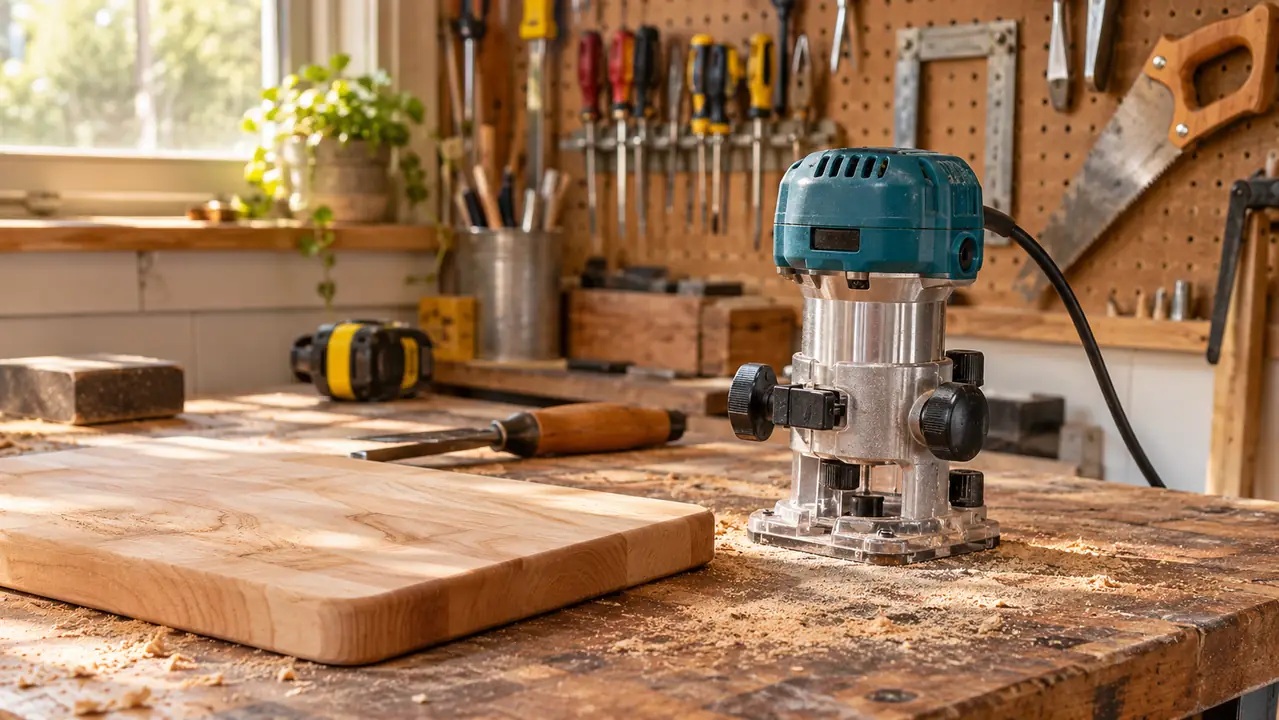
I bought the Bosch Colt PR20EVS to round over the edges of cutting boards. That was the entire reason. Before it, I was breaking the edges with a block plane and then sanding until my fingers went numb, and I was spending more time on the four edges of a maple board than on the glue-up, the flattening, and the first coat of finish combined. A board that should have been a Saturday morning job was eating the whole weekend.
That was three years ago. The Colt now sits on the shelf above my workbench, within arm's reach, and it comes down more often than any power tool in the garage except the table saw. I have run it through walnut, white oak, hard maple, cherry, and more pine than I will admit to. I have used it on cutting boards, small boxes, shelves, a cedar chest, and every chamfer on two sets of Adirondack chairs. This is not a first-week impression. It is what I found after living with the thing for a while, in one shop, on one bench, with a 20 amp circuit I ran myself.
The Quick Verdict
A one-hand router that earns its shelf space on edge work and small joinery. Not the tool for deep cuts in hard wood, but that is not what it is built for.
Amazon Check Today's Price →The Tool That Replaced My Block Plane on Every Edge in the Shop
If most of your routing is roundovers, chamfers, and shallow joinery in a garage shop, this is the one to look at first. Check the current price and see what comes in the box before you decide.
Amazon Check Today's Price on Amazon →How I've Used It
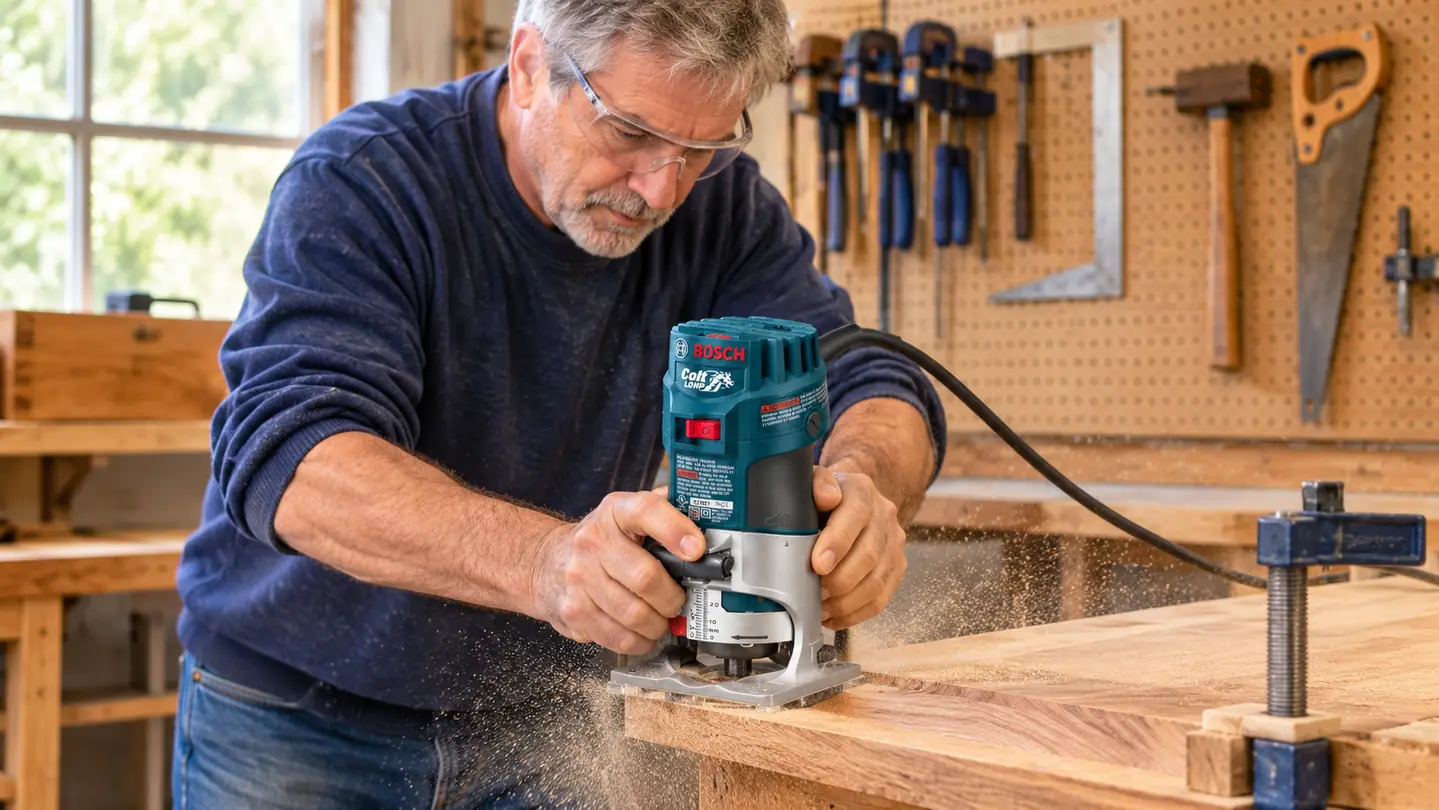
The first real job was six end grain cutting boards for Christmas. I chucked a 1/4 inch roundover bit in the collet, set the depth against a scrap of the same maple, and ran the four long edges and the corners. The router weighs 3.3 pounds, so I could hold it with one hand and steer the cord with the other, which matters when you are walking around a board that is clamped on edge. I have done that job every year since and it takes about twenty minutes now instead of an afternoon. Six boards, all four edges, no burns.
The second job was hinge mortises on a set of shop cabinet doors. This is not what the tool is marketed for, and I would not want to cut a hundred of them with it, but for six doors it was fine. I set the depth with the micro adjustment, checked it against the hinge leaf on a piece of scrap, and worked the mortise in two passes. The base sat flat on the stile and did not rock. That flat base is the part I trust most. If it rocked, the hinge would sit proud and the door would rub, and I would be filling and starting over with a chisel.
The third job is the one that keeps it on the shelf: chamfers. Every leg, arm, and back slat on two sets of Adirondack chairs got a chamfer off the same bit, and the small body made it easy to follow a curved arm without the tool fighting me. On the long straight runs I clamped a straightedge and used the base against it. On the curves I ran freehand and cleaned up with a card scraper. Three years in, that is still most of what this router does, and it does it well enough that I stopped looking for a better way to do it.
What 1 HP and 5.6 Amps Actually Buy You
The Bosch figures on the box are 1.0 hp max, drawn through 5.6 amps at 120 volts, with a variable speed range of 16,000 to 35,000 rpm. Those numbers matter less than what they feel like in the hand. In white oak, taking a 1/4 inch roundover in one pass, the tool does not labor. It holds speed and the cut stays clean. Where the horsepower runs out is when you ask for more than the bit wants to give. A 3/4 inch straight bit buried in hard maple will slow it down, and you will hear it in the pitch of the motor before you see it in the cut.
The soft-start circuitry is a small thing that I notice every time I pick it up. The motor comes up to speed over about a second instead of jumping. On a small base, with a bit hanging out where you can see it, that matters. I have used routers that torque sideways at startup and leave a nick in the workpiece before the bit is even in the cut. This one does not do that. It is not a feature you will read on a spec sheet and get excited over, but it is the reason I can start the tool with the base already sitting flat on the work.
The fixed base accepts bits up to 1-5/16 inches, and the collet is 1/4 inch, self releasing. That last part is the honest limit of the tool. If your plan involves 1/2 inch shank panel bits, this is not the router for that job and no amount of technique will change it. For 1/4 inch shank edge profiles, small roundovers, chamfers, and straight bits, the capacity is not a constraint at all. You just have to know which side of that line your work sits on.
The Depth Adjustment Is the Reason to Own It
Depth adjustment is split into macro and micro, and the micro side is what makes this tool worth owning. The macro adjustment moves the motor in the base in visible steps. Then the micro adjustment lets you move it a hair, and a hair is the unit that edge work actually runs on. I set the bit to leave the edge just barely proud, run a test on scrap, and take it down until the bearing has nothing left to cut. That is the whole method, and the base makes it a thirty second loop.
The first time I tried that with a cheap router, I overshot by a sixteenth and had to start the board over. With this one I can creep up on the number. The aluminum base has finger support pockets on either side, which sounds like marketing until you are trimming the edge of a narrow rail and need somewhere to put your hands without tipping the tool. I use them constantly on chair parts. A 1/4 inch roundover on a 1-1/2 inch wide arm is not a job you want to do with a top heavy router that wants to roll off the edge.
The micro adjustment is the feature I use on every single job. I set the bit to leave the edge just proud, test on scrap, and creep down until the bearing has nothing left to cut. That is the difference between a thirty second setup and a ruined board.
Bits That Earn Their Place
I own four bits for this router and I use two of them. A 1/4 inch roundover with a bearing gets ninety percent of the work. A 1/8 inch roundover does the small boxes and the picture frames. A 1/2 inch straight bit gets used for shallow grooves and for cleaning up the corners of stopped dadoes. The fourth is a chamfer bit I bought for the Adirondack chairs and now barely touch. The collet is a 1/4 inch self releasing chuck, and self releasing is worth something. When you loosen the nut, the collet lets go of the shank instead of holding it, so you are not yanking a warm bit out of the motor with a pair of pliers. I change bits more often than I need to because it takes five seconds.
Setup time on an edge profile is under a minute if you keep a scrap of the same stock on the bench. That is the habit I would pass on to anyone starting out. Set the bit against the scrap, adjust the macro, then the micro, run one pass, look at the profile, adjust again. Doing that on the actual workpiece is how you get a burned edge or a roundover that is deeper on one end than the other. The Bosch makes that loop quick enough that I actually run it, which is not true of every tool I own.
Where It Struggles
Ask it for deep cuts and it will tell you no. A 3/8 inch straight bit cutting a 1/2 inch deep groove in hard maple is beyond what 1 hp wants to do in one pass, and trying it will burn the bit and leave a groove with scorch marks in it. The answer is multiple passes, which is the answer with any router, but you will feel the limit sooner here than you would on a 2 hp machine. That is the trade for a tool that weighs 3.3 pounds and hangs on a peg when you are done.
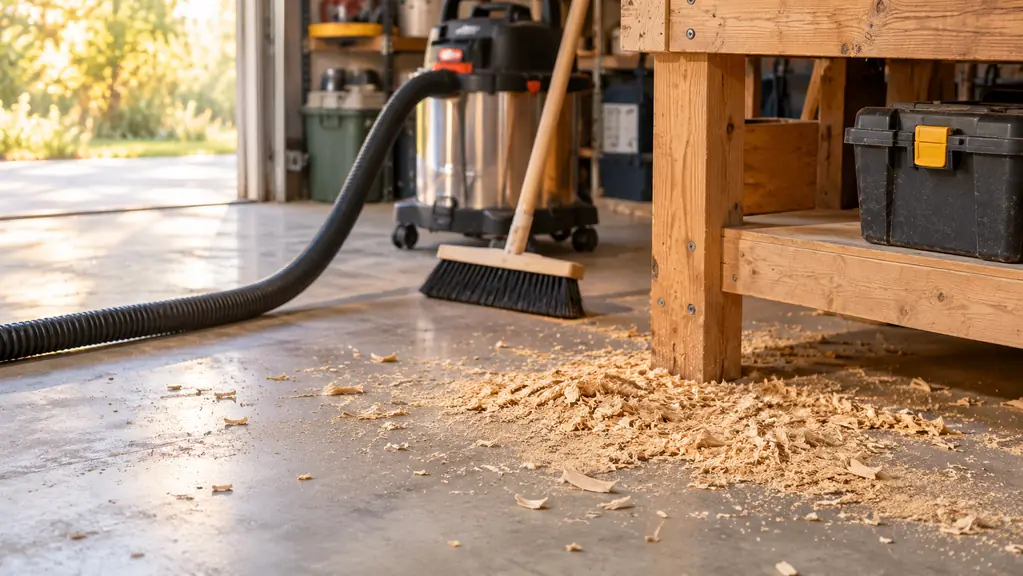
Chips go everywhere. There is no bag hanging off this thing in my shop, and the base does not give the shop vac much to work with, so I set the hose behind the cut and let it catch what it catches. On a long run of roundover I end up with a fan of chips across the bench, the floor, and my shoes. I sweep after. If dust control is the main thing you care about, this is a real point against it and I would rather say so than pretend otherwise.
The small base is an advantage on edges and a disadvantage on anything narrow and tall. Set it on a 1 inch wide stile and the center of gravity is high enough that you want both hands and a light touch. It has not tipped on me, but I am careful with it in a way I am not with a bigger tool. On wide panels the base is stable and the small size is pure gain, because you can see the bit and the cut line at the same time without leaning over the motor.
What Three Years Did to It
Three years of weekend use has changed the cord more than the tool. The base still sits flat on the bench when I set it down, which is the test I use, the collet still grips a shank without me having to lean on the wrench, and the speed control still moves through its range without a dead spot. I have replaced no parts and added no accessories. The limited one year warranty expired a long time ago and I have not needed it.
The honest accounting is that this router has done what I asked and nothing more. It has not been dropped off a bench, it has not cut a hundred feet of hardwood in a day, and it has never been on a job site. It is a hobby shop tool that gets used a few times a month, and for that use I have no reason to replace it. If I were running a cabinet shop I would own a bigger router and I would probably still keep the Bosch for edges, because the weight is the whole point.
What I Liked
- 3.3 pounds means one hand steering around a board clamped on edge
- Micro depth adjustment lets you creep up on a cut instead of guessing
- Soft start keeps the base from jumping when you pull the trigger
- Aluminum fixed base still sits flat after three years of weekend use
- Variable speed from 16,000 to 35,000 rpm handles hardwood without burning
Where It Falls Short
- 1/4 inch collet only, so no 1/2 inch shank bits
- 1 hp runs out on deep cuts in hard maple and needs multiple passes
- Chips go everywhere and the base gives the shop vac little to grab
- Small footprint wants both hands on narrow stock
Who This Is For
This is for the person with one bench and a shelf of tools who does edge work more than production work. If your routing is roundovers on cutting boards, chamfers on chair parts, small hinge mortises, and the occasional shallow groove, the Colt covers all of it in a package you can hold in one hand and store on a shelf. It suits a garage shop with a single 20 amp circuit and no room to leave a router table set up. It is also a reasonable first router, because the small size teaches you to feel the cut instead of fighting the tool.
Who Should Skip It
Skip it if you plan to raise panels, cut deep grooves in hard wood all day, or run 1/2 inch shank bits. That is a different machine with a different weight and a different price. Skip it too if dust collection is a priority, because this base is not built around a hose and the chips will find your floor. And skip it if you want one router to do everything, including work bolted into a table. The Colt is a specialist. It is honest about that, and so am I.
Three Years, No Replaced Parts, Still Within Arm's Reach
If your routing is edge work and small joinery, this is the tool I kept. Check the current price and what comes in the box before you decide.
Amazon Check Today's Price on Amazon →