
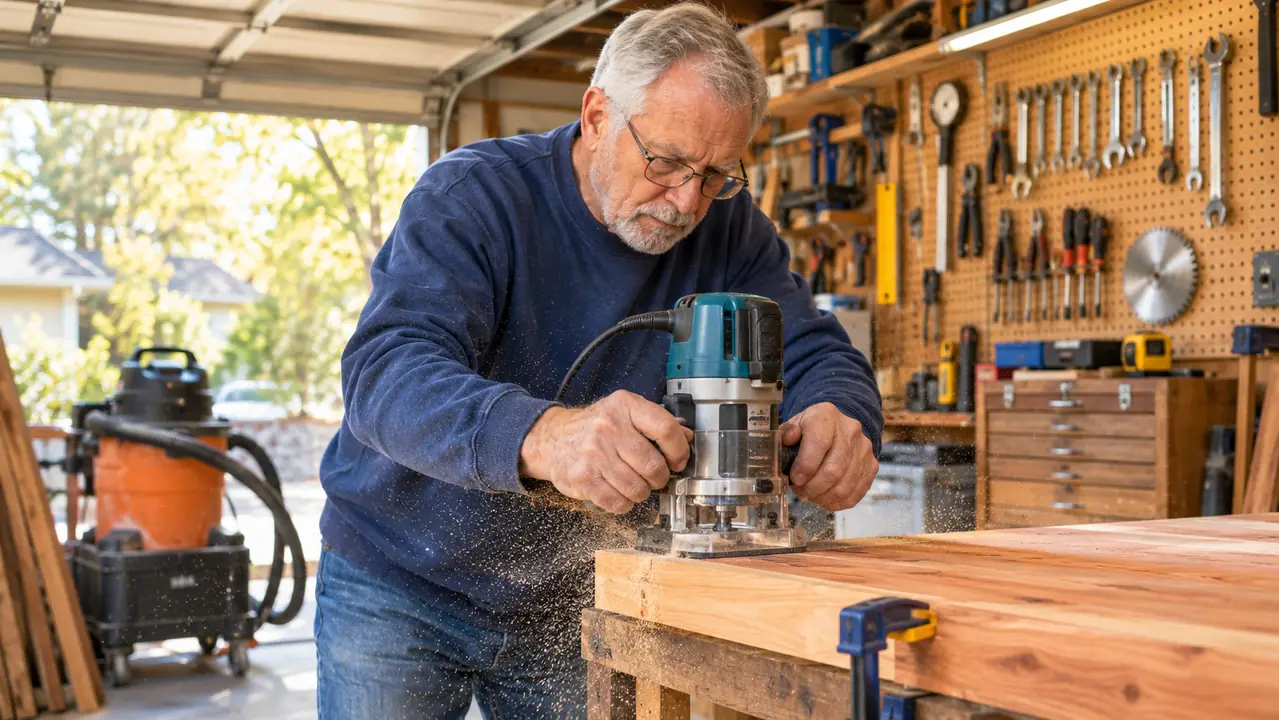
The first picnic table I built for the backyard had edges like a butter knife. I ran the top through the table saw, hit the edges with a sanding block for about ninety seconds, and called it finished. Then Carol ran her hand along the apron, pulled it back, and asked whether I planned to serve dinner on it or defend the yard with it.
I spent the next two weekends trying to fix that. A sanding block gave me edges that were soft in some places and still sharp in others, because hand pressure is not a machine. A file was worse. A hand plane would have done it if I had the skill to keep it perfectly square along eight feet of cedar, which I do not. What I wanted was one consistent radius down the whole length of the top, and none of those tools will give you that on purpose.
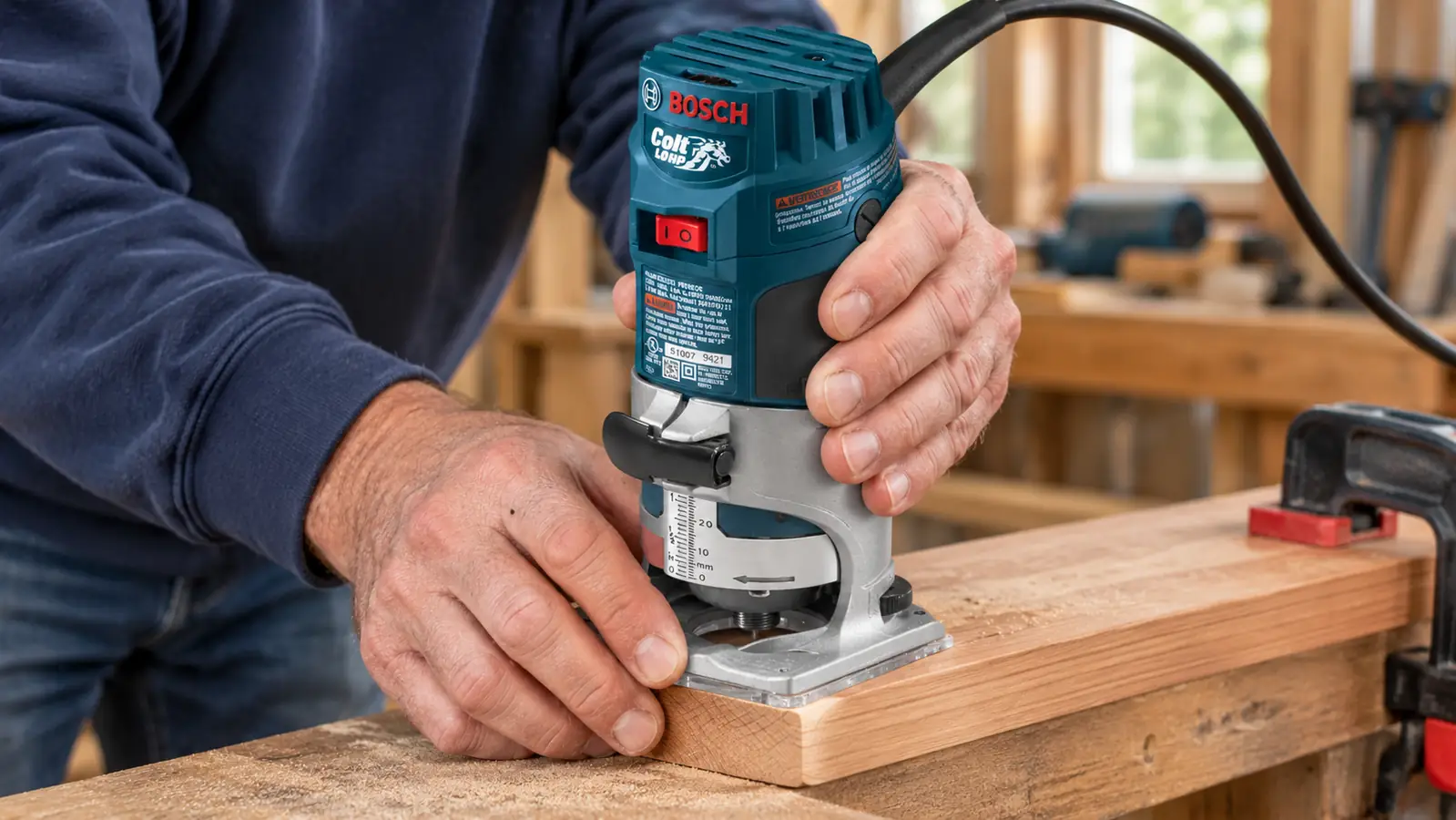
The tool that does it is a router, and not the big half-inch machine bolted under a table. A small one you hold in your hands and walk along the edge. I bought the Bosch PR20EVS Colt, the 1 HP palm router, and had it out of the box before my shop apron was on.
The first thing I noticed was the weight. Three and a third pounds. That matters more than a spec sheet suggests, because you are holding the machine sideways against a table edge for six feet at a time, and a heavy router wants to fall away from the work. This one sits where you put it and stays there through the pass.
The base is a fixed aluminum base, not a plunge base. That reads like a limitation, and for some jobs it is. For a roundover it is the right answer. You set the depth, you make your pass, and the bit does not move under your hand halfway along a table top.
Three and a third pounds. When you hold a router sideways against a table edge for six feet, weight stops being a spec and becomes the whole job.
The edge that stopped snagging sleeves
One pass with a roundover bit and the sharp corner is gone for good. This is the machine that lives on my bench now, not in the cabinet.
Amazon Check Today's Price on Amazon →Depth is where people fight a small router, and it is where the Bosch earned its place in my shop. The adjustment is two stage. One motion brings the bit down close, then a finer adjustment takes it the rest of the way in small fractions until the roundover meets the top exactly. I want the curve to finish flush with the surface, no lip and no step you can feel with a thumbnail. Macro and micro adjustment is how you get there without pulling the bit out four times.
My first pass taught me something about speed. Cedar tears out if you push a roundover bit through it at full tilt against the grain. The Colt runs from 16,000 to 35,000 rpm and the temptation is to leave it wound all the way up. I backed it off, took lighter passes, and looked at which way the grain was running before I started. The tear-out went away. The router did not change. My hand did.
The soft-start circuit is another thing I did not expect to care about. It brings the motor up to speed instead of snapping on. On a small base that is the difference between a controlled entry and a lurch, and when the bit is buried in an edge six inches from your fingers, a lurch is the last thing you want.
The base has molded finger support pockets on top. I figured that was catalog copy until the first time I trimmed end grain and needed to hold the machine down and forward at the same time. The pockets give your fingers somewhere to push. The base takes bits up to 1-5/16 inches, which covers every roundover and chamfer in my drawer, and the quarter-inch collet is self releasing, so the bit drops out when you loosen it instead of staying stuck in the nut.
It has been on the bench a while now. Same base, same collet, no wobble in the shaft. The body is plastic over that aluminum base, which is a fair description of most routers in this class, and mine has survived one fall off the bench onto concrete. I do not recommend that as a test.
Since then I have used the Bosch on bookshelves, a cedar chest, and a run of small boxes. Same setup every time. Set the depth, one pass per edge, and the piece comes off the bench feeling finished instead of dangerous.
What I'd Tell You If We Were Sitting at My Kitchen Table
Buy the bit with the router. The machine is half the purchase and the roundover is the other half, and a cheap bit will chatter and leave you blaming the tool. Practice on a scrap of the same cedar before you go near a finished top, because that first pass always tells you something you did not plan for. And run the shop vac while you work. A palm router throws chips further than you think, and cedar dust gets into everything.
What it will not do is everything. The fixed base means no plunge work, so if you want to cut hinge mortises or drop a bit into the middle of a panel, you want a different machine. It carries a one-year limited warranty, which tells you what the manufacturer thinks of the duty cycle. And it is small on purpose. If you run a router table all day, this is not that tool. It is the one you pick up for ten minutes to make an edge safe, then set back down.
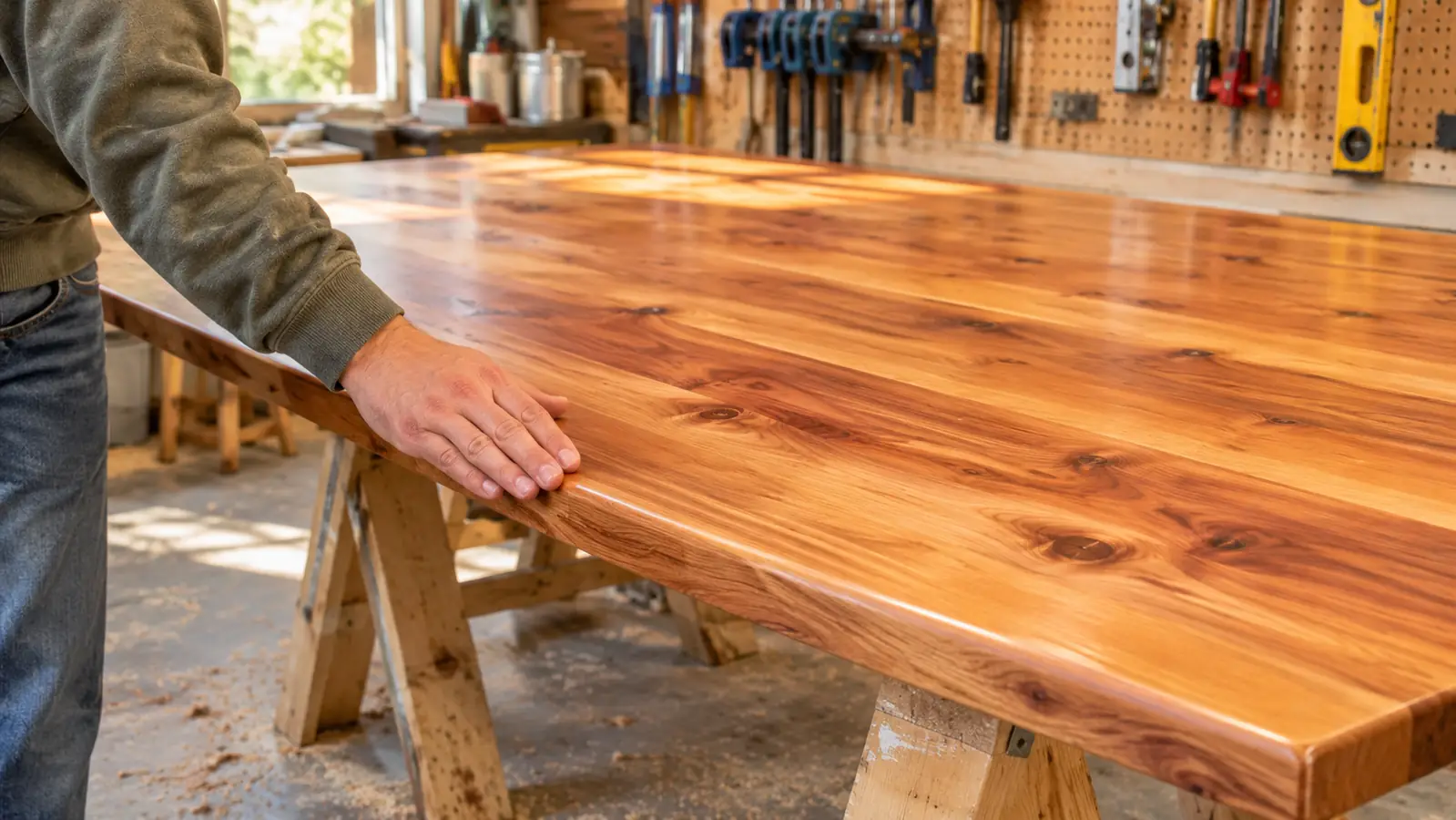
Ten minutes at the bench, and the corner is gone
The Bosch Colt with a roundover bit is the setup I use on every table top that leaves my shop. Bit in, depth set, one pass per edge.
Amazon Check Today's Price on Amazon →