
The chisels I inherited came from a neighbor, a cabinetmaker who hung up his apron and moved south. He handed me a canvas roll with four chisels inside and said they had done good work for thirty years. He was right. They had. By the time they reached my bench, though, they had also been sharpened a few hundred times too many, and the backs had gone hollow in the middle from decades of lapping on a stone that was never quite flat.
I worked around that for longer than I care to admit. You learn the workarounds. You keep the hollow away from the edge, you skew the blade a little, you sneak up on a line instead of cutting to it. But a chisel that will not sit flat is a chisel you fight. I fought it until March, when I ordered the Narex 6 piece set.
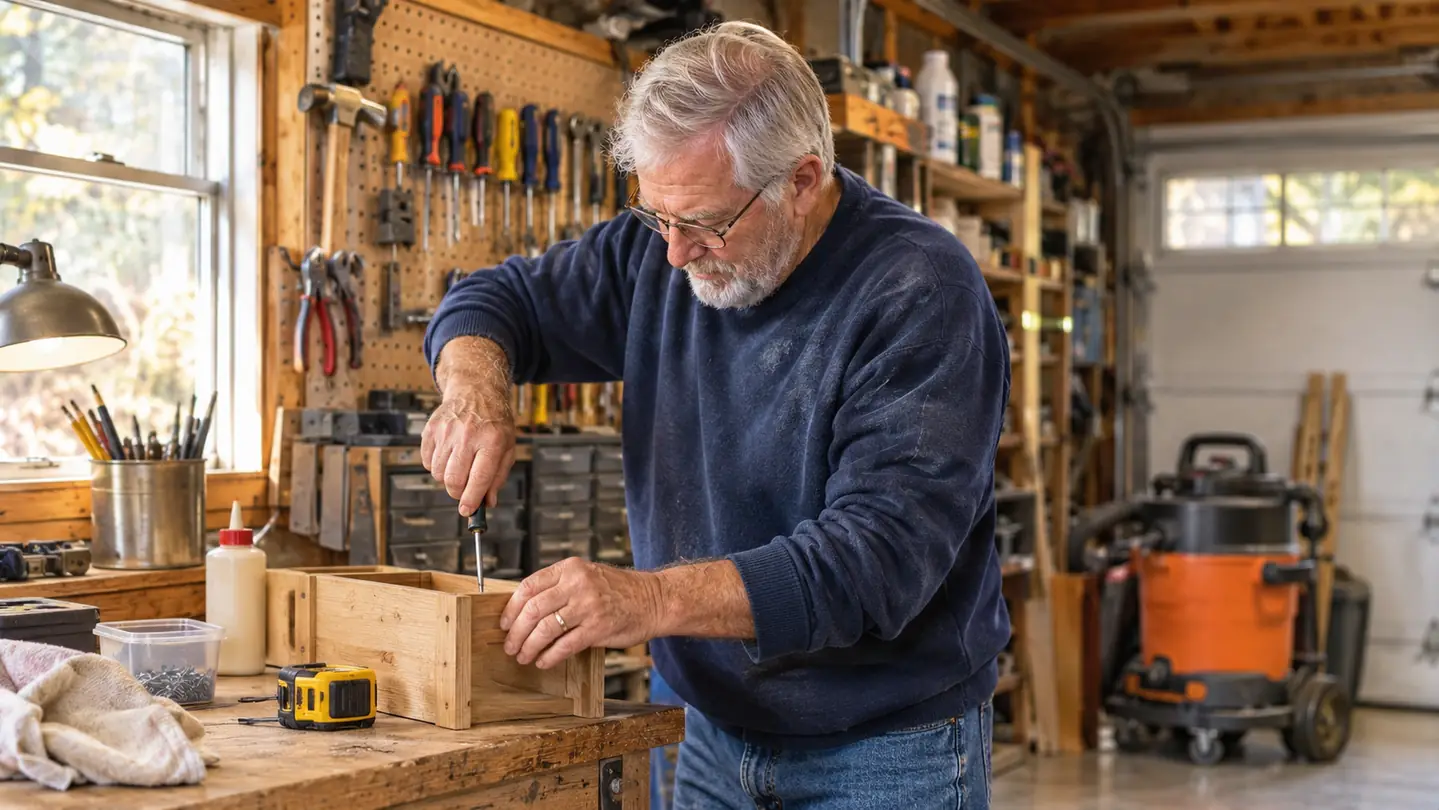
Nothing I build is complicated. Bookshelves, a cedar chest, cutting boards, a picnic table that lives out on the deck, a small cabinet for Carol's sewing room. That is about the whole list. But every one of those jobs has a moment where a chisel is the only tool that will do the work. Cleaning out the corners of a dado. Paring end grain on a cutting board so the glue joint closes tight. Setting a hinge into a cabinet door.
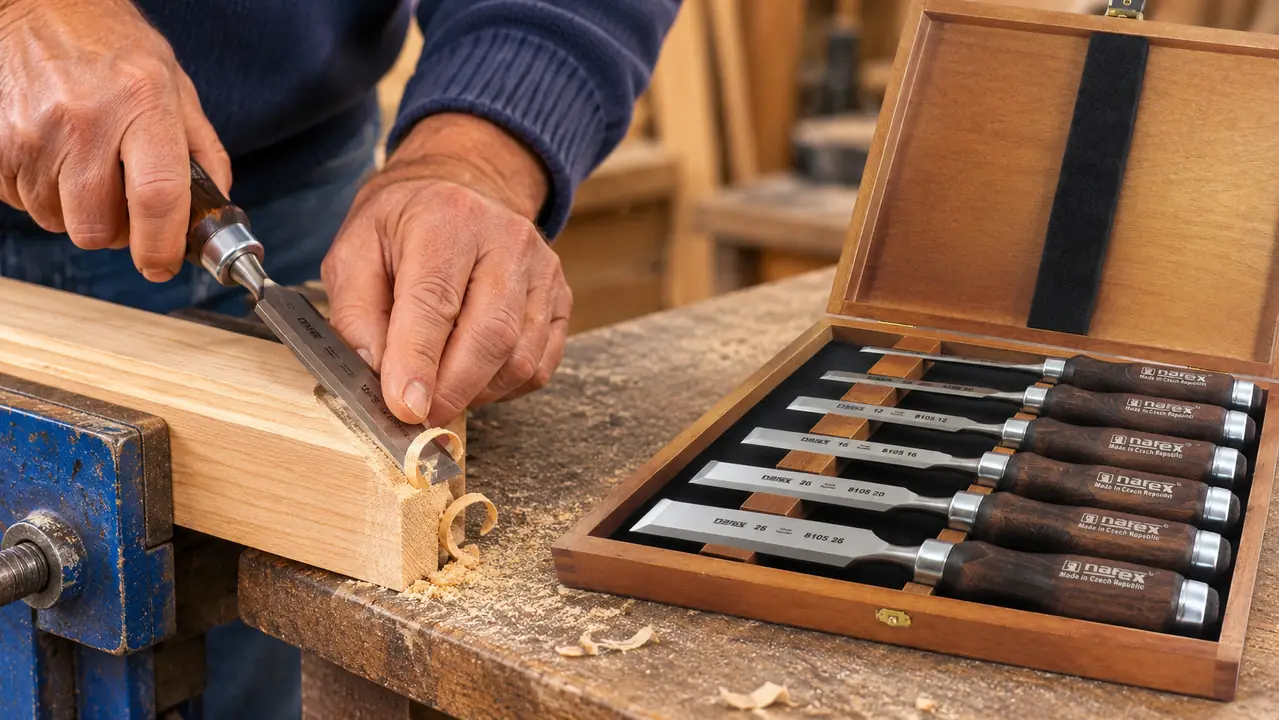
Six chisels arrived in a wooden presentation box: 6, 10, 12, 16, 20 and 26 mm. Chrome-manganese steel, hardened to Rc 59, bevel ground at 25 degrees, stained European Beech handles. Nobody sent them to me. I bought them the way you would, off the listing, after reading through the reviews first.
The first evening I flattened the back of the 12 mm on a diamond plate. That is the test I trust most. If a back goes flat in a few minutes, the steel was ground properly before it left the factory, and this one did. I did the same with the 20 mm the next night. Both came in flat enough that I was honing within the half hour, which is not something I could ever say about the old roll.
A back that goes flat in a few minutes tells me more about a chisel than any spec printed on the box ever will.
The set that finally sat flat on the work
Six sizes from 6 mm to 26 mm, Rc 59 chrome-manganese steel, bevel ground at 25 degrees. The wooden box is a nice touch. The flat back is the reason I kept them.
Amazon Check Today's Price on Amazon →Six months in, the Narex set has settled into a routine at the bench. I touch the edge up on an 8000 grit water stone every few sessions and strop in between. The 25 degree bevel means I am not fighting a steep secondary angle every time I go to the stone. When an edge does need a fresh grind, it goes quickly, because there is not much steel to remove.
The 26 mm has done most of the heavy work. I used it to pare the end grain on a white oak picnic table this summer, and it held an edge through a full afternoon of it. That is the difference between Rc 59 and the soft stuff in a bargain set. The old chisels would have needed three trips to the stone. This one needed one, and it was still cutting clean when I quit for the day.
What I did not expect was how much the small sizes would earn their keep. The 6 mm cleans out the corners of a quarter inch groove better than anything I have owned. The 10 mm has become the one I reach for without thinking, which is the highest thing I can say about a tool. The whole set weighs 1.6 pounds, so it is not work to pick one up and put it back.
Where They Fall Short
Three complaints, and they are honest ones. The Narex set has no 3 mm and no 8 mm, and I have wanted both. The handles come bare, so you will want to oil them or they will pick up dirt from your hands. And the wooden box, nice as it is, eats shelf space in a garage shop where shelf space is already spoken for. Mine sits in a drawer now.
The 26 mm is also a two hand tool on small work. That is not a flaw, it is just physics, but if you build boxes and small parts you will use it less than you think. And no chisel arrives ready to go. You will still spend an evening on the stones. Any review that tells you otherwise is selling something.
What I'd Tell You If We Were Sitting at My Kitchen Table
I would tell you the chisels are not the interesting part of this story. The interesting part is that I put up with bad edges for a decade because the old set had history and I did not want to replace them. That was a bad trade. If your chisels will not sit flat, you are not a worse woodworker than you were five years ago. Your tools are.
I would also tell you not to buy a bigger set than you will use. Six sizes covers everything I build, and the two I reach for most are the 10 and the 16. Start there, learn to sharpen properly, and add the rest when a project actually asks for it. The Narex set is a reasonable place to stop looking, and I say that as a man who has owned three sets of chisels and only kept one.
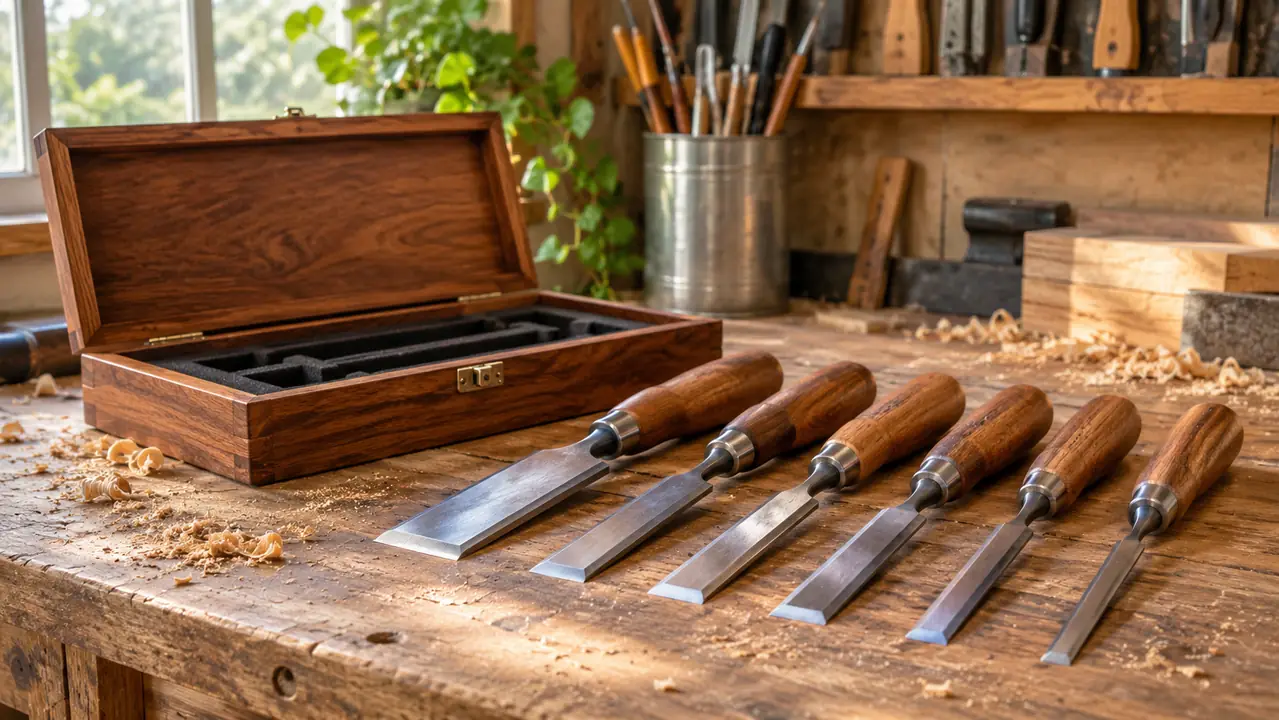
Six chisels, one box, no more fighting the edge
The same set that has been on my bench since March. Check the current price and the full size list on Amazon before you decide.
Amazon Check Today's Price on Amazon →